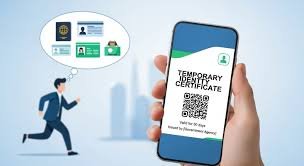
A temporary identity certificate is a government-issued document that verifies who I am for a short, defined period—typically while my primary ID is being processed, renewed, or replaced. It fills a crucial gap: without it, I may be unable to access essential services, complete legal or financial tasks, or even travel domestically where ID checks apply. In plain terms, it’s my stopgap identity proof that stands in for a standard ID until the permanent version is ready.
Why It Matters Right Now
Life doesn’t pause when a wallet is lost, a passport is expired, or a name change is pending. A temporary identity certificate lets me keep moving—registering for exams, onboarding at a new job, signing a lease, verifying age, or handling banking procedures—while official documentation catches up.
Key Features and Validity
Temporary identity certificates share several common traits across jurisdictions, though the exact rules vary by country, state, or municipality.
Core Attributes
- Officially issued by a recognized authority (e.g., civil registry, DMV, ministry of interior)
- Time-bound validity, often ranging from a few days to several months
- Contains essential identifying data: full name, date of birth, a photo (where required), issuance and expiry dates, and a unique certificate number
- Security safeguards like watermarks, holograms, barcodes/QR codes, and tamper-evident seals
- May be issued physically, digitally, or as a hybrid (paper certificate plus digital verification link)
Typical Validity Periods
- Lost/stolen ID replacement: 2–12 weeks
- Pending renewals: aligned to processing times, often 30–90 days
- Special circumstances (e.g., disaster relief, urgent travel): shorter windows with expedited review
When I Might Need One
Temporary identity certificates are particularly useful in these scenarios:
Lost, Stolen, or Damaged ID
If my ID disappears or is damaged beyond legibility, I can apply for a temporary certificate to bridge the gap while a replacement is produced.
Renewal or Processing Delays
When I’ve submitted renewal paperwork and processing takes longer than expected, a temporary certificate helps me avoid service interruptions.
Legal Changes and Life Events
During a name, gender, or address change, many agencies allow a temporary identity certificate to reflect updated data while permanent documents are reissued.
Emergencies and Special Access
In emergencies—natural disasters, evacuations, urgent medical situations—authorities may accept a temporary certificate to confirm identity quickly.
What It Looks Like and How It’s Verified
Format and Content
Most certificates include:
- Personal details that match my application and records
- A recent photo (if required) taken by the issuing office or captured to official standards
- Machine-readable elements (MRZ, barcode, QR) that route to a verification system
- Issuing authority name, contact, and authentication signature or seal
Verification Methods
- Visual inspection and comparison with my appearance
- Scanning a barcode/QR code to check real-time status
- Cross-reference with agency databases to confirm active validity and detect revocation
How to Apply: Step-by-Step
I can usually request a temporary identity certificate in person or online. Here’s a common pathway:
Gather Documents
- Proof of identity (even partial: birth certificate, old ID copy, passport, social security or national insurance number)
- Proof of address (utility bill, lease, bank statement)
- Supporting records for changes (court order, marriage certificate, deed poll)
Submit an Application
- Complete the official form online or at a local office
- Provide biometric data where required (photo, fingerprints)
- Pay the applicable fee (often lower than a full ID issuance)
Undergo Review and Issuance
- Officers verify my data against civil or population registers
- I may receive the certificate same-day for urgent needs or within a few business days
- Some regions send a secure digital version to my email/app alongside the physical document
Acceptance and Limitations
Where It’s Commonly Accepted
- Government counters for ongoing applications
- Banks and financial services for KYC refresh, account maintenance, and limited transactions
- Employers and schools for onboarding and examinations
- Healthcare facilities for patient registration
- Domestic travel checks where permitted by law
Potential Restrictions
- International travel: usually not valid as a passport substitute
- Age-restricted purchases: depends on local policy and merchant discretion
- High-security facilities: may require permanent ID or additional verification
- Expired certificates: immediately invalid—renew or request re-issuance if processing delays persist
Security, Privacy, and Fraud Prevention
Built-In Protections
- Anti-tamper print features and secure substrates
- Unique serials tied to centralized databases
- Real-time revocation lists for lost, stolen, or misused certificates
Personal Best Practices
- Report lost/stolen certificates immediately
- Store the document securely and avoid unnecessary photocopies
- Share only through official channels; use digital verification links instead of sending images
- Check expiry reminders and renew before lapses
Digital-First Trends
Many jurisdictions are shifting to digital identity frameworks. Temporary identity certificates fit neatly into this future:
Mobile Wallet Integration
- Add a temporary credential to a government or approved wallet app
- Present a QR code for time-limited verification
- Receive push alerts on status changes or upcoming expiry
Selective Disclosure
- Share only what’s needed (e.g., “over 18” status) rather than full personal details
- Use cryptographic proofs that confirm validity without exposing raw data
Frequently Asked Questions
Is a temporary identity certificate the same as a temporary resident permit?
No. A temporary identity certificate verifies who I am; a temporary resident permit relates to my immigration status and right to stay or work.
Can I drive with a temporary identity certificate?
Not by itself. Driving typically requires a valid driver’s license. Some regions issue a separate temporary driving permit.
What if an institution refuses it?
Ask for their written policy, offer alternative verification (e.g., digital check), or provide a secondary ID. If refusal conflicts with regulations, I can escalate to the issuing authority.
Practical Tips for a Smooth Experience
Keep Copies and Records
- Save digital scans in a secure, encrypted location
- Note the certificate number and issuance/expiry dates
Align Timelines
- Submit renewal or replacement applications early
- If processing overruns the expiry, request an extension document before the certificate lapses
Prepare a Backup ID Set
- Maintain a folder with birth certificate, proof of address, and past IDs
- Keep contact details of the issuing authority handy for quick follow-up